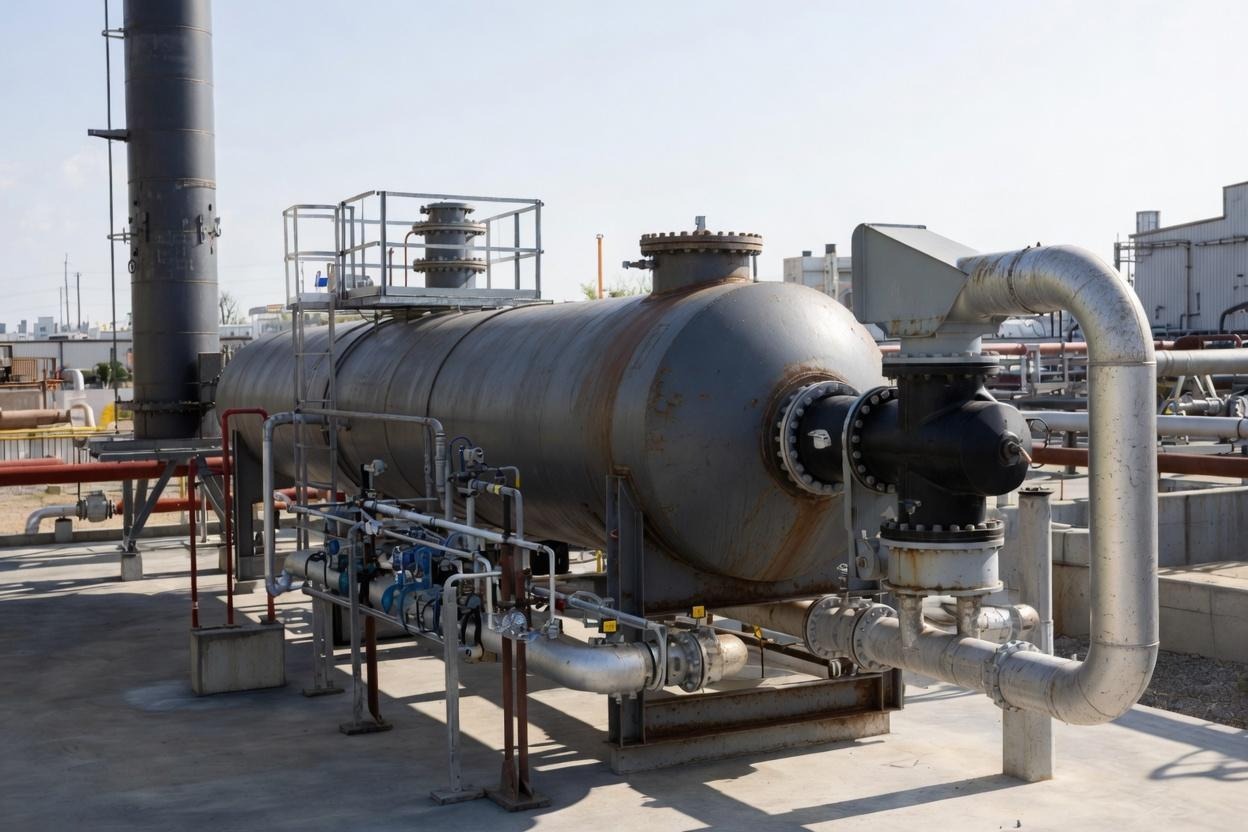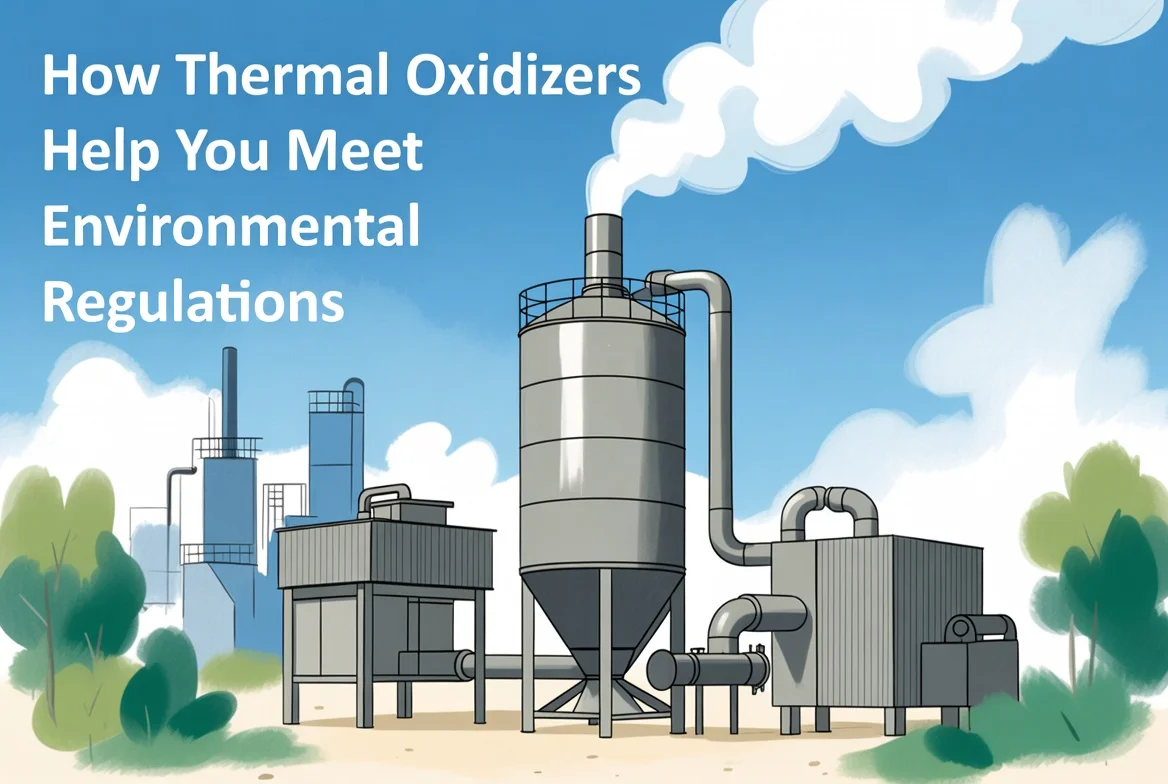
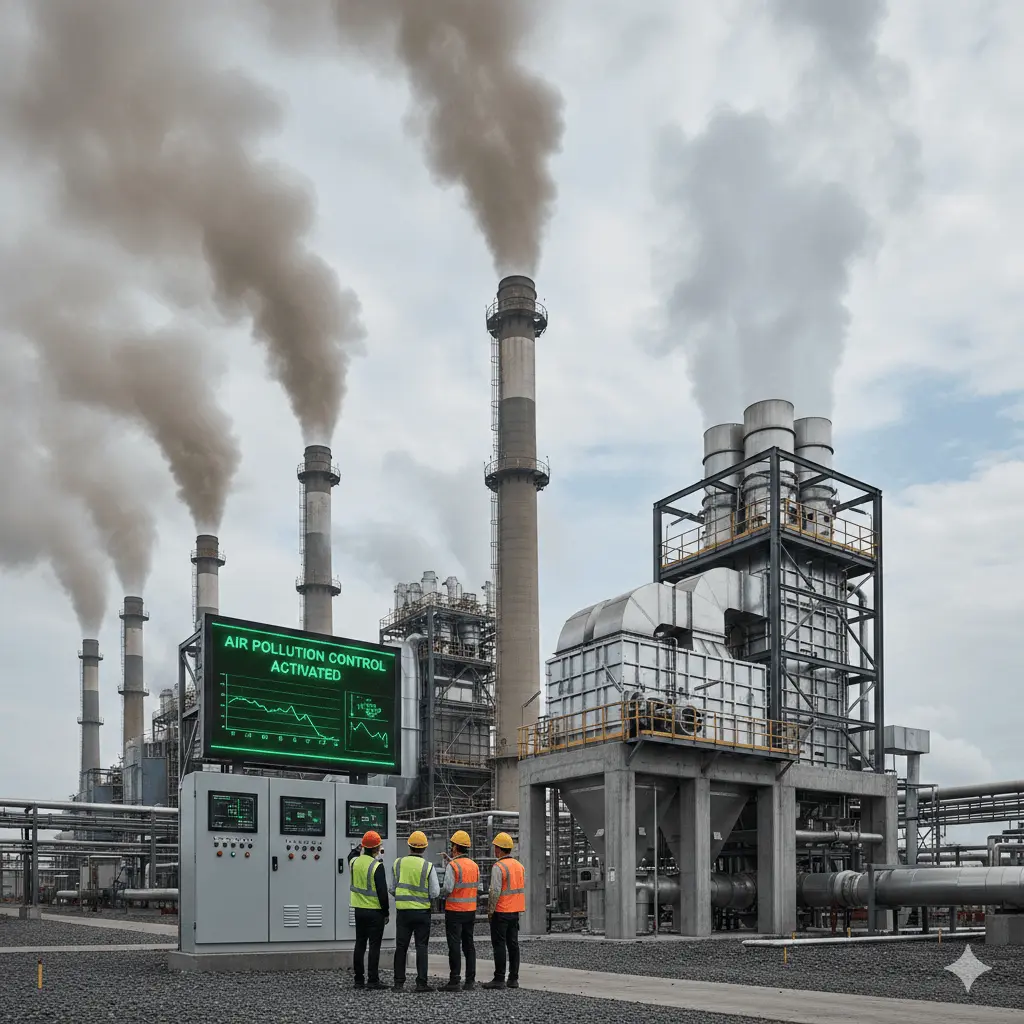
Thermal oxidizers, also known as thermal incinerators (the “I” word that fell out of favor for gaseous destruction) or TOX systems, are critical air pollution control devices used in industrial settings. They destroy volatile organic compounds (VOCs), hazardous air pollutants (HAPs), and other harmful emissions through “high-temperature” combustion, converting them into harmless carbon dioxide (CO₂) and water vapor (H₂O).
How Thermal Oxidizers Work
The core principle is thermal oxidation. Industrial exhaust gas streams containing pollutants are heated to high temperatures—typically 1,400°F to 1,800°F (760°C to 980°C)—in a combustion chamber. At these temperatures, with sufficient residence time (usually 0.5–2 seconds) and turbulence, the organic molecules break down via oxidation.
Key design factors include:
- Temperature: High enough to ignite and sustain combustion / oxidation.
- Residence Time: Long enough for complete destruction (often achieving 95–99%+ efficiency) to the level required.
- Turbulence/Mixing: Ensures thorough contact between pollutants, oxygen, and heat for that proper conversion level.
Many systems incorporate heat recovery to preheat incoming exhaust with outgoing hot gases, dramatically reducing fuel consumption. If the system is more exothermic, other heat recovery types like a waste heat boiler or a therminol heater may be better for the plant / application.
Main Types of Thermal Oxidizers
- Direct-Fired Thermal Oxidizers (DFTO): The simplest design. Pollutants are burned directly in a combustion chamber. Best for high-VOC concentrations in which the unit may be self sustaining. Otherwise, the DFTO may result higher fuel use for low(er) concenterations..
- Recuperative Thermal Oxidizers: Use gas to gas heat exchangers (or even therminol heat exchanger system) to recover 50–70% of the heat, improving energy efficiency for applications having the right fit of organic concentration / offgas heating value.
- Regenerative Thermal Oxidizers (RTOs): Highly efficient, using ceramic media beds to recover up to 95% of heat. Ideal for lower VOC concentrations and continuous operation, and more steady state flows.
Catalytic variants lower the required temperature (using a catalyst) but are distinct from pure thermal systems.
Applications and Benefits
Thermal oxidizers serve industries like:
- Chemical and petrochemical manufacturing
- Pharmaceuticals
- Printing, coating, and packaging
- Waste management and refining
Benefits include:
- High destruction efficiency and regulatory compliance (e.g., EPA standards).
- Versatility across varying pollutant loads.
- Reduced environmental impact by preventing smog-forming and toxic emissions.
- Long-term cost savings through heat recovery, despite higher upfront investment.
Considerations
While effective, thermal oxidizers require proper maintenance, maintaining and monitoring of temperature that assures emissions compliance, and careful handling of additional concerns if present like particulate laden streams, corrosive or halogenated compounds. Nacah Tech creates custom designs to achieve top efficiency with minimized operating costs.
In an era of tightening environmental regulations, thermal oxidizers remain a proven, reliable solution for cleaned industrial air exhaust. Whether you’re an engineer, facility manager, or simply curious about pollution control technology, understanding these systems highlights the engineering ingenuity behind sustainable manufacturing.