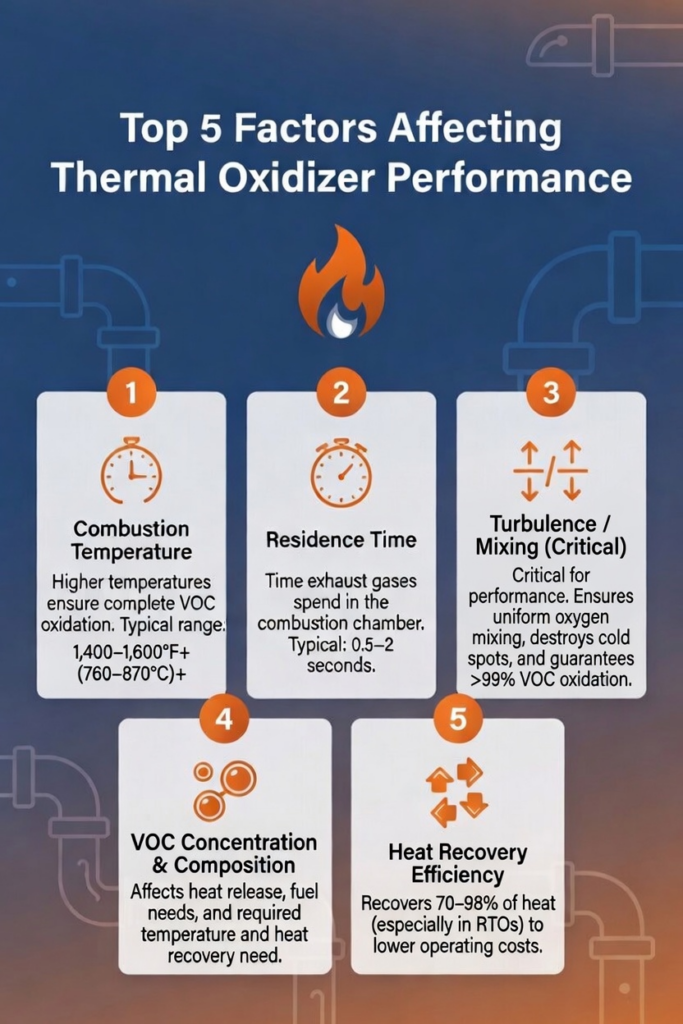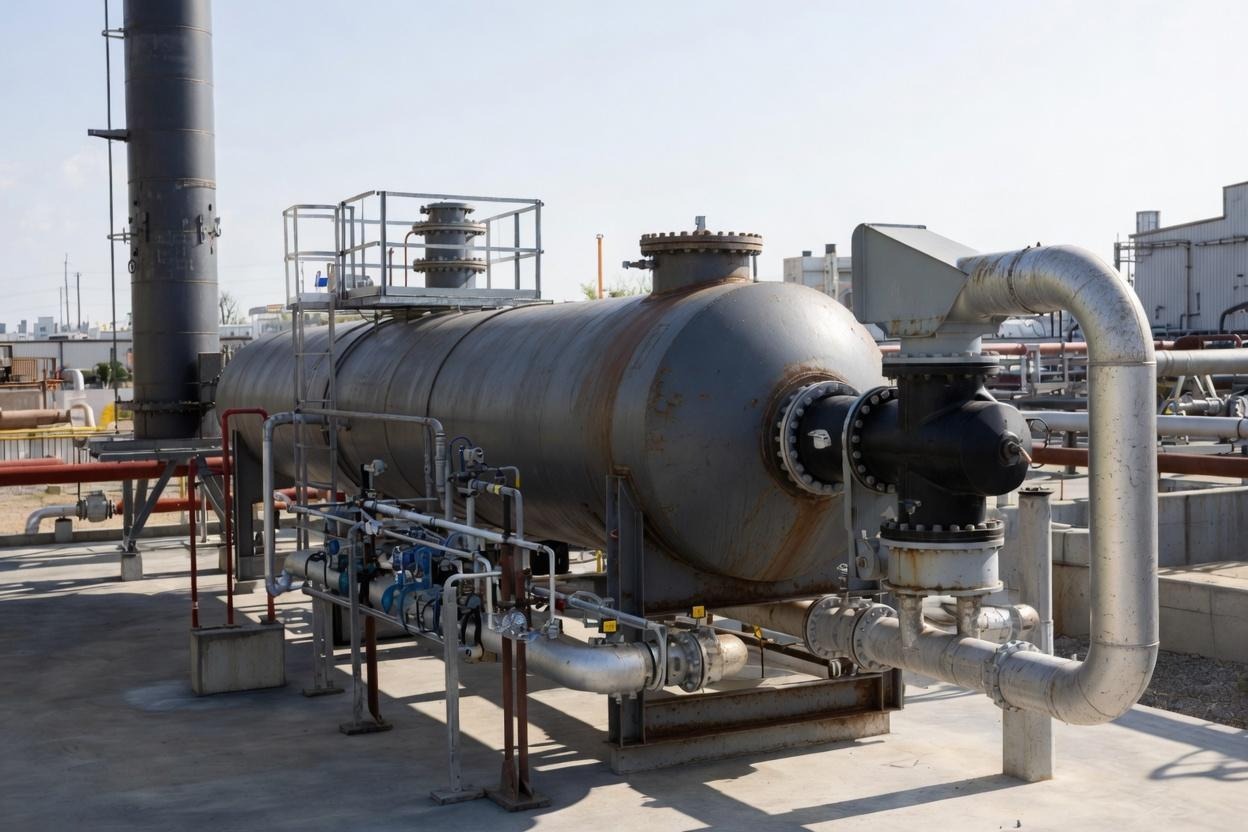
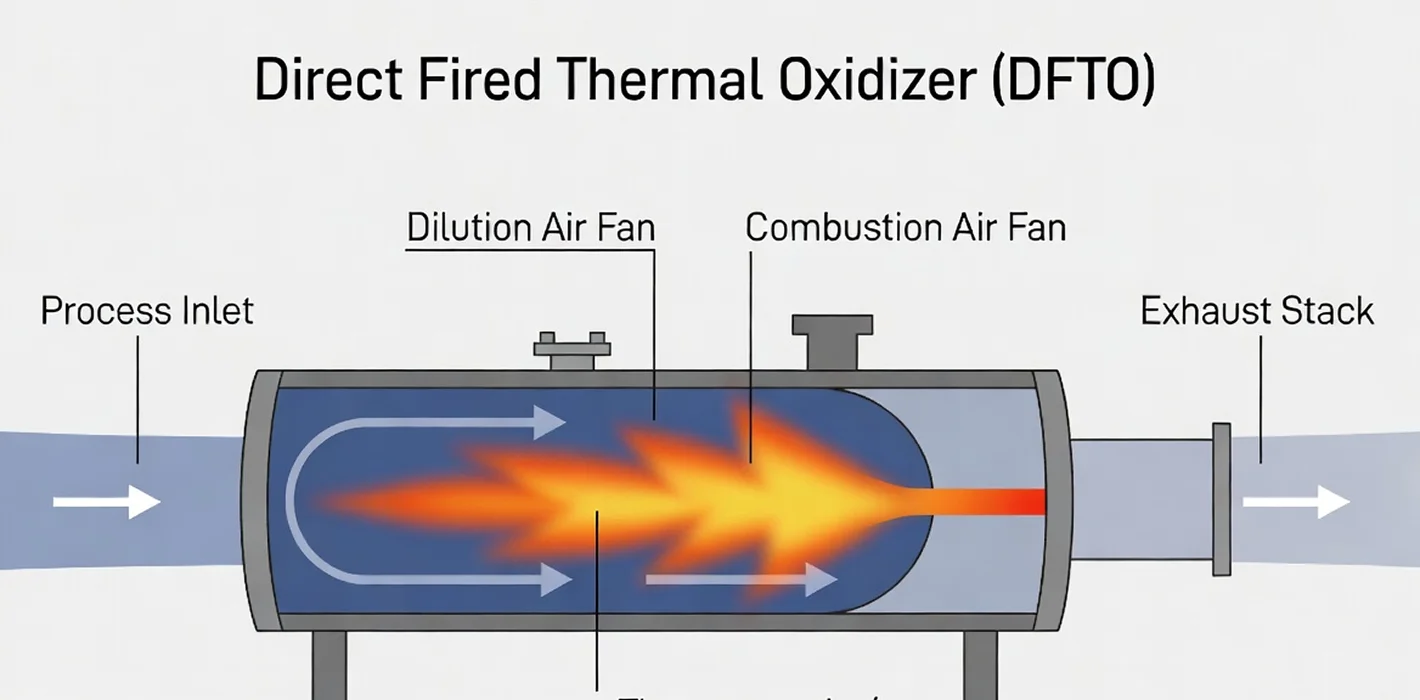
Thermal oxidizers are critical air pollution control devices that destroy volatile organic compounds (VOCs) and hazardous air pollutants (HAPs) through high-temperature combustion. Achieving high destruction removal efficiency (DRE, often >99%) and optimal energy efficiency depends on several key operating and design factors. Here are the top 5:
1. Combustion Chamber Temperature
Higher temperatures ensure complete oxidation of VOCs. Most systems operate between 1,400–1,600°F (760–870°C), depending on the compounds. Too low, and destruction efficiency drops; too high, and it increases fuel use and NOx formation. Precise temperature control is essential for compliance. The operating temperature is optimized for the target DRE of contaminant compounds.
2. Residence Time
This is the duration the exhaust gases spend in the combustion chamber (typically 0.5–2 seconds) at temperature. Longer residence time at the right temperature allows complete reaction, improving DRE. It’s directly tied to chamber volume and airflow rate when accounting for the volume of the products of combustion (POC’s).
3. Turbulence and Mixing
Effective mixing of the waste gas with combustion air and oxygen is vital for uniform oxidation. Poor turbulence creates cold spots or short-circuiting, reducing performance. Well-designed burners and chamber geometry promote this “3T” principle (Time, Temperature, Turbulence).
4. Inlet VOC Concentration and Composition
VOC loading (concentration and types of compounds) affects heat release and required supplemental fuel. Low concentrations need more energy input; high ones can be self-sustaining direct fired thermal oxidizers, but risk overheating. Halogenated or sulfur-containing VOCs may require special materials or higher temps (or post combustion treatment).
5. Heat Recovery Efficiency
Most modern units recover heat to preheat incoming air (e.g., recuperative thermal oxidizers at approximately 70%, or regenerative thermal oxidizers—RTOs <= 98% of heat), slashing operating costs. Factors like ceramic media condition, valve sealing, and system design directly impact this. Fouling from particulates reduces efficiency over time. High concentration streams can be self-sustaining so they have no need for heat recovery.
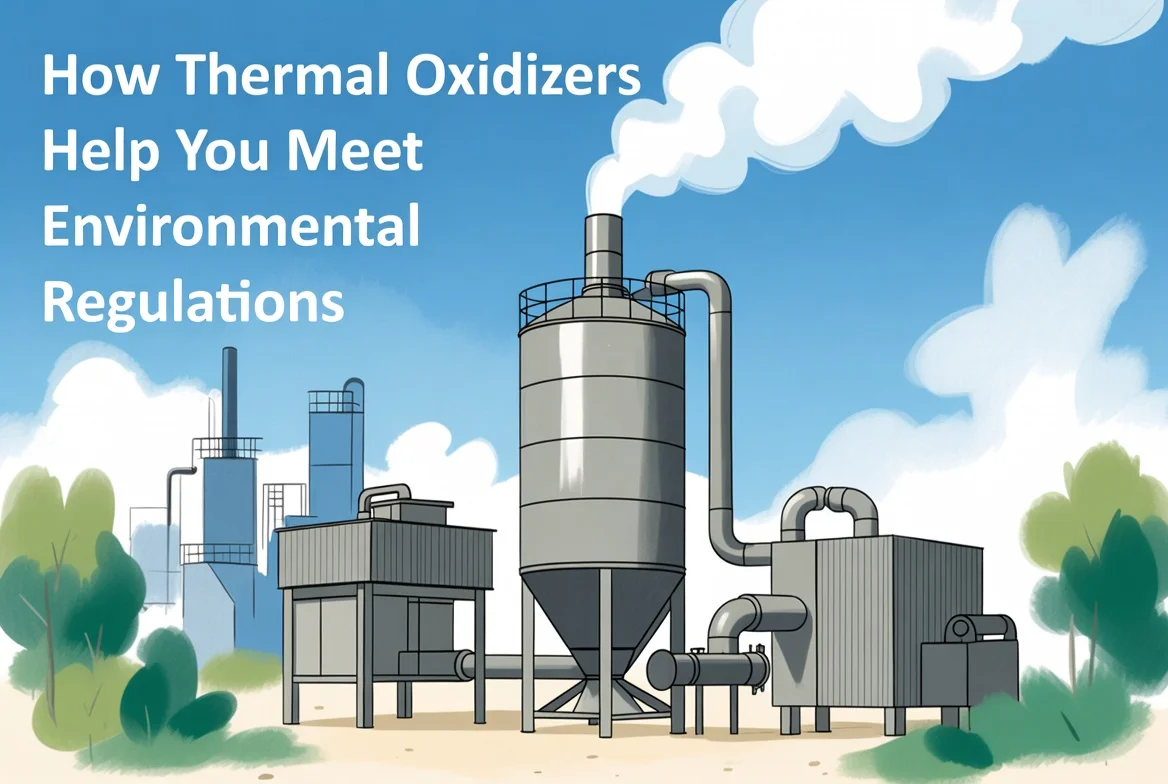
Understanding and optimizing these factors ensures regulatory compliance, lower fuel consumption, and longer equipment life.